1. Ushapan: Awaken the Digestive Fire
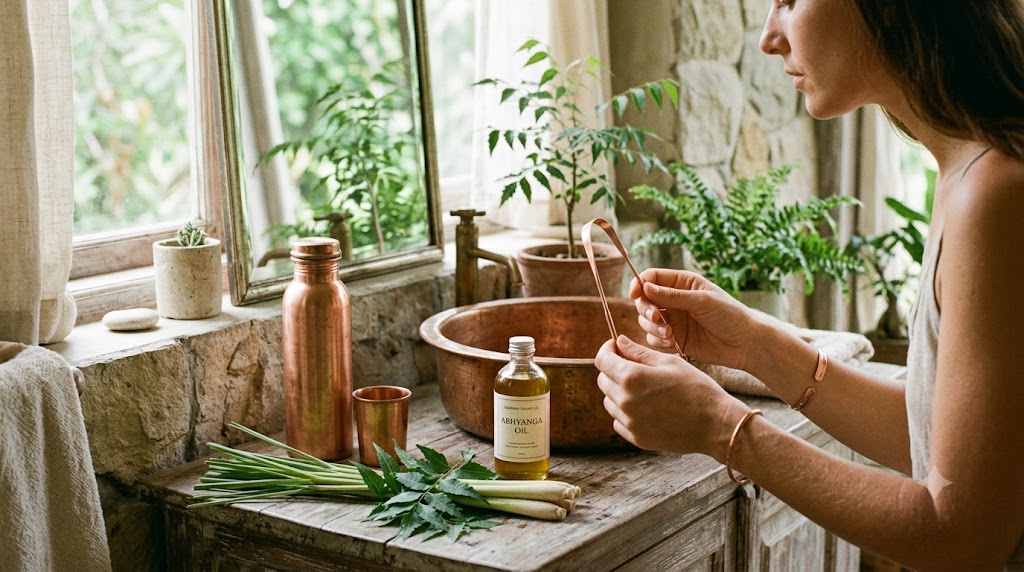
Before reaching for an espresso, start the day with Ushapan—drinking 1–2 glasses of warm or room-temperature water first thing after waking, preferably stored overnight in a pure copper vessel (Tamra Jal).
- The Mechanism: Warm water gently stimulates bowel peristalsis and flushes out stagnant nighttime toxins. Copper naturally ionizes water, imparting mild antimicrobial and antioxidant properties.
- Practice Note: Keep the water warm rather than iced; cold water constricts digestive capillaries and dampens Agni.
2. Jivha Nirlekhana: Copper Tongue Scraping
Brushing your teeth cleans enamel, but sleep allows systemic toxins (Ama) to collect as a white or yellowish film across the tongue.
- The Mechanism: Scraping the tongue with a U-shaped copper or stainless-steel scraper removes bacteria, freshens breath, and clears the taste buds. Clean taste receptors send more accurate satiety and enzyme signals directly to the stomach.
- How to Do It: Gently draw the scraper from the back of the tongue forward 5 to 7 times before brushing.
3. Kavala & Gandusha: Oil Pulling
Swishing oil inside the mouth is an ancient ritual to strengthen oral tissues and tone the jawline.
- The Oils: Cold-pressed sesame oil is classical and warming; virgin coconut oil is cooling and ideal for sensitive or bleeding gums (excess Pitta).
- How to Do It: Swish 1 tablespoon of oil continuously for 5–10 minutes without swallowing. Spit it directly into a trash can (to prevent clogged drains) and rinse thoroughly with warm water.
4. Abhyanga: Warm Herbal Self-Massage
Often viewed as an occasional spa luxury, Abhyanga is traditionally a daily act of preventative medicine and nervous system regulation.
- The Science: The skin is the home of Vata dosha, governed by the nervous system. Massaging warm, unrefined oil into the skin calms sensory overload, lubricates joints, and enhances lymphatic drainage.
- The Routine: Warm 2 tablespoons of oil (sesame for dry/cold types, coconut for warm/reactive skin). Massage in long strokes along the limbs and circular motions over the joints and abdomen. Leave on for 10 minutes before stepping into a warm shower.
5. Nasya: Nourishing the Senses
In Ayurveda, the nose is considered the direct doorway to the brain and consciousness (Prana).
- The Practice: Placing 1–2 drops of warm Anu Tailam (medicated herbal oil) or plain organic sesame oil into each nostril cleanses nasal passages, lubricates dry mucous membranes, and relieves tension headaches.
- When to Avoid: Skip during acute sinus infections, productive coughs, or right before bed.
Quick Morning Sequence at a Glance
| Order | Ritual | Time Needed | Primary System Targeted |
|---|---|---|---|
| 1 | Copper Water (Ushapan) | 1 min | GI Tract & Elimination |
| 2 | Tongue Scraping (Jivha Nirlekhana) | 1 min | Taste Buds & Oral Biome |
| 3 | Oil Pulling (Gandusha) | 5–10 mins | Gums, Teeth & Throat |
| 4 | Warm Oil Massage (Abhyanga) | 5–10 mins | Nervous System & Lymph |
| 5 | Nasal Oil Drops (Nasya) | 1 min | Sinuses, Mind & Respiration |